Physio for perthes disease

Specialist physio to support movement, strength, and progress.
Helping Children with Perthes Disease.

Expert Therapy to Protect Growing Hips and Promote Healthy Recovery

Expert physiotherapy to protect growing hips

Perthes disease (also known as Legg-Calvé-Perthes disease) is a rare condition that affects the hip joint in young children, typically between the ages of 4 and 10. It occurs when the blood supply to the femoral head (the ball at the top of the thigh bone) is temporarily disrupted, leading to bone weakening and changes in hip shape. At PaedsPhysio, our physio team are here to help your child move more comfortably, build strength, and protect their developing joints through targeted, expert physiotherapy.
WHAT IS PERTHES DISEASE?

What is Perthes Disease?

The journey from early symptoms to recovery

Understanding the journey from early symptoms to recovery.
In Perthes disease, disruption of blood flow to the femoral head causes the bone to soften and gradually lose its round shape, a process called avascular necrosis. Children may notice a limp, stiffness in the hip, or pain in the groin, thigh, or even the knee. Although the blood supply eventually returns and healing begins, this process can take several years and may leave lasting changes in the shape of the hip.
Paediatric Physiotherapists work alongside families to support each stage of the recovery process. Early identification and physiotherapy intervention can make a significant difference, helping to reduce pain, maintain movement, and minimise the risk of long-term complications such as hip deformity or early arthritis.

Children with Perthes disease may experience:

  • Limping or altered walking pattern.
  • Groin, thigh, or knee pain.
  • Stiffness and reduced movement in the hip.
  • Difficulty with physical activities.
  • Weakness in the muscles around the hip.
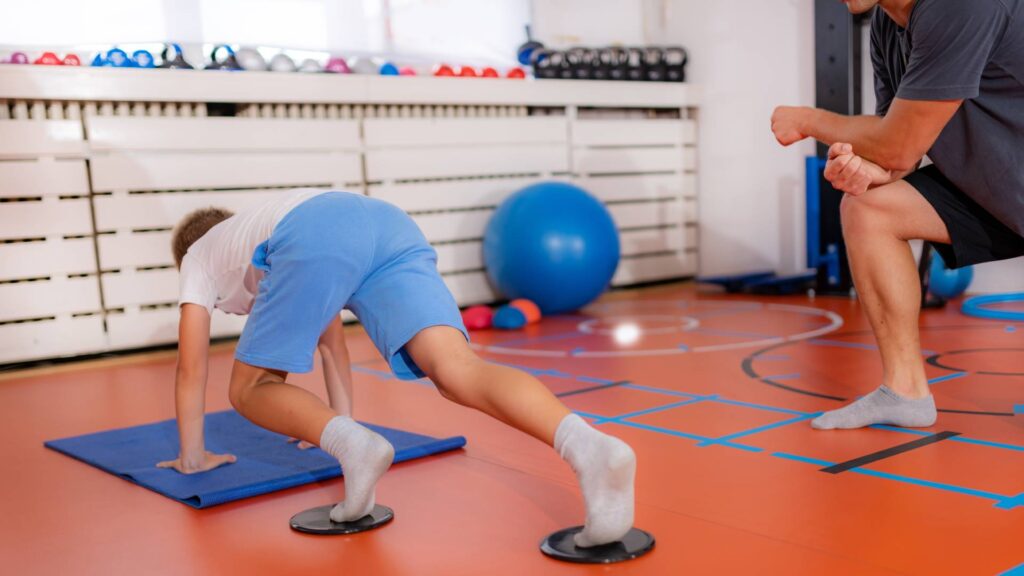
Child doing mountain climbers for better core and abdominal muscle strength
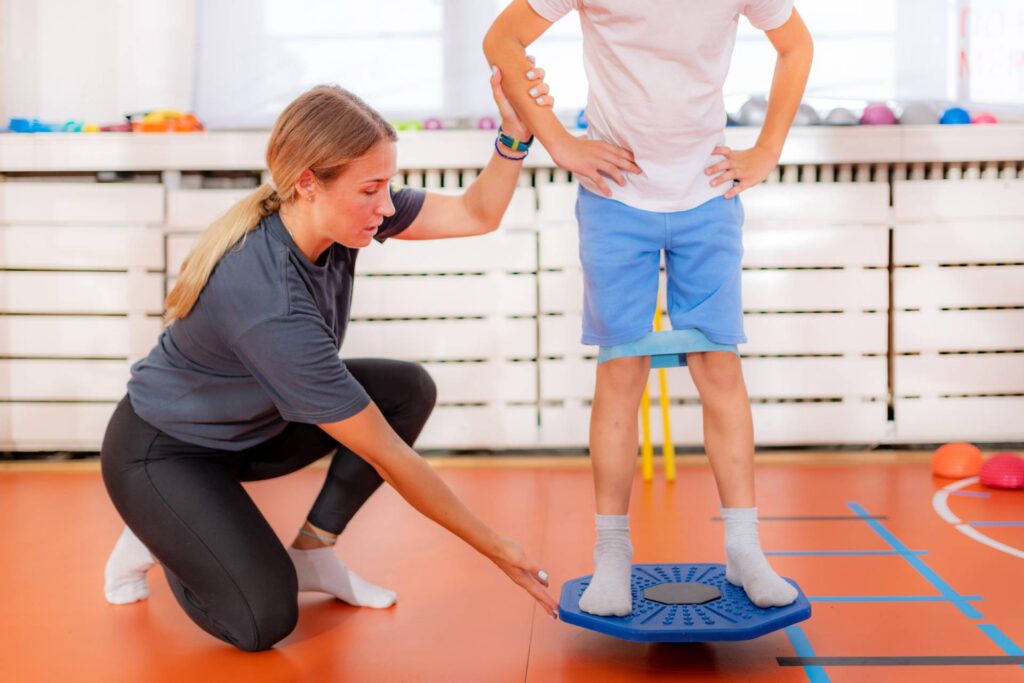
Children exercising with balancing discs and resistance bands
WHAT IS DEVELOPMENTAL COORDINATION DISORDER?
HOW PHYSIOTHERAPY CAN HELP CHILDREN WITH Perthes Disease

Protecting the hip, building strength, and supporting recovery

Protecting the hip, building strength, and supporting recovery.

Physiotherapy plays a crucial role in helping children with Perthes disease manage their symptoms and keep moving safely as healing progresses. Our approach at PaedsPhysio is carefully tailored to each child’s stage of the condition, focusing on maximising movement while protecting the hip joint from unnecessary stress.

Our careful, child-centred approach ensures that activity is shaped to help, rather than hinder, the natural healing process. We focus on supporting each child’s comfort, confidence, and long-term joint health.

Our physiotherapy treatment may include:

  • Muscle strengthening exercises for key areas such as the quadriceps, hamstrings, and gluteal muscles to support the hip.
  • Stretching routines to maintain flexibility and reduce joint stiffness.
  • Hydrotherapy sessions to encourage movement in a low-weight environment, easing stress on the hip.
  • Gait re-education to help restore a natural, efficient walking pattern as symptoms settle.
  • Activity modification advice, encouraging low-impact activities like swimming or static cycling.
  • Education for families about exercise levels, helping avoid overloading the hip and promoting safe recovery.
PHYSIO FOR HEALTHY HIPS

Helping Hip Mobility and Recovery.

Helping hip strength, mobility and recovery

Early, expert children’s physiotherapy can help a child with Perthes disease to protect their hips, stay active, and move confidently as they grow. With the right support and guidance, children can reduce stiffness, build strength, and develop the best possible foundation for lifelong movement. At PaedsPhysio, we’re here to help your child every step of the way.