
Children’s physiotherapy for hypermobility

Specialist Physiotherapy to build strength and confidence.
Understanding Joint Hypermobility

Helping your child move comfortably and feel in control

Hypermobility means that a child’s joints move beyond the normal range due to extra elasticity in the soft tissues that support them. Whilst some children with hypermobile joints have no problems at all, others may experience pain or fatigue, and challenges with strength, posture and balance. Our experienced Paediatric Physiotherapy team work with families to provide clear advice, individualised physiotherapy, and practical strategies to help each child feel stronger, more stable, and able to enjoy everyday activities with confidence.
WHAT IS HYPERMOBILITY?

What is Hypermobility?

When extra flexibility needs specialist support

Joint hypermobility in children is often described as being “double-jointed”, and may be seen most often in the fingers, wrists, elbows, shoulders, knees, and ankles. Some children have flexible joints without any symptoms (asymptomatic hypermobility), while others may experience pain and difficulties, known as Benign Joint Hypermobility Syndrome (BJHS).
In some cases, hypermobility is part of a broader condition such as Ehlers-Danlos Syndrome, Marfan Syndrome, or Loeys-Dietz Syndrome, where other tissues in the body are also affected.
At PaedsPhysio, we carry out a thorough assessment, understanding that treating hypermobility in children requires expertise and sensitivity. We look beyond flexibility alone, exploring strength, coordination, and family history, so that we can create a clear and supportive plan for your child’s needs.
  • Frequent joint or muscle pain, especially after physical activity.
  • Tiredness and fatigue with everyday tasks.
  • Joint instability, dislocations or partial dislocations (subluxations).
  • Poor balance, coordination challenges, and clumsiness.
  • Flat feet or difficulties with posture.
  • Fidgetiness and challenges maintaining one position for long periods.
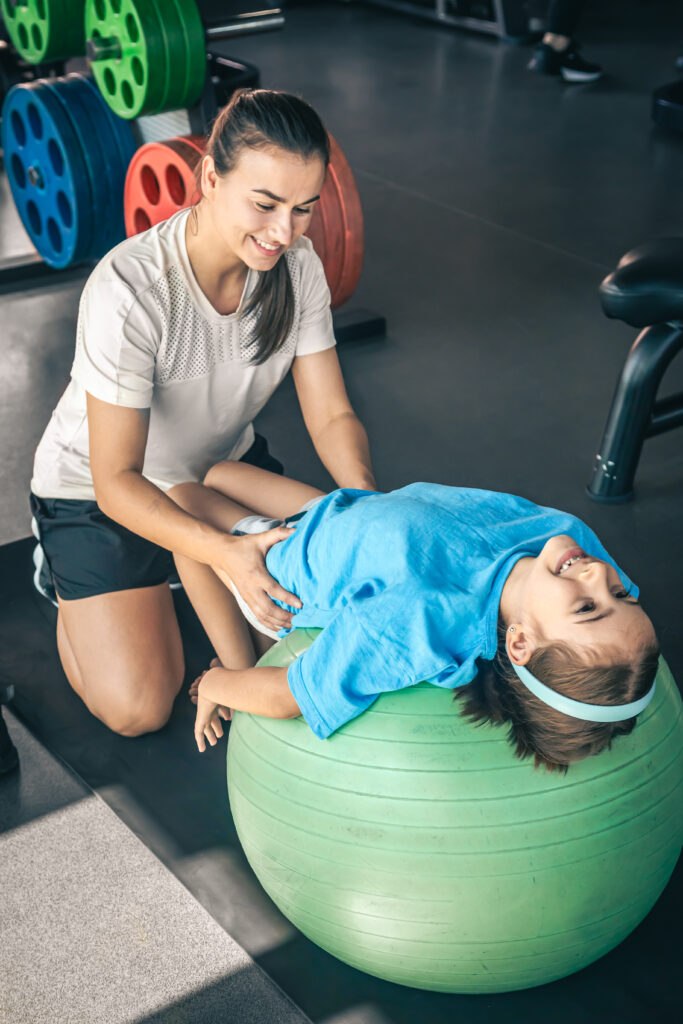
Happy girl stretches her body on a fitball in the gym.
Cute child girl stretching on pilates fitness ball with mom in gym.
How Physiotherapy Can Help Children with Hypermobility​

Building strength, stability, and confidence through physiotherapy

Building strength, stability, and confidence through physiotherapy.

Although we cannot change the flexibility of connective tissues, physiotherapy plays a crucial role in helping children with hypermobility feel stronger, move better, and reduce the impact of their symptoms. At PaedsPhysio, we provide specialist, age-appropriate programmes designed to improve muscle strength, joint stability, balance, and body awareness. Our approach is fun, achievable, and built around the goals that matter most to you and your child.

Our physiotherapy programmes for hypermobility may include: expand to list like ‘Children’s Physiotherapy following Brain Injury’ section in Acquired Brain Injury Physiotherapy – Paeds Physio

We also provide ongoing advice to families, helping you recognise when extra support might be needed, such as when pain persists, joints dislocate frequently, or systemic symptoms of a connective tissue disorder emerge.

  • Muscle strengthening through progressive, low-resistance exercises.
  • Core stability training to support posture and movement control.
  • Activities to improve balance, coordination, and proprioception (joint position sense).
  • Advice on footwear, orthotics, and joint protection strategies.
  • Guidance on managing pain and preventing fatigue.
  • Support with adapting school activities, including PE and classroom seating.
  • Recommendations for safe physical activities such as swimming, cycling, Pilates, yoga (with modifications), and martial arts under supervision.
BUILDING CONFIDENCE THROUGH PHYSIO

Increasing strength, stability and smiles!

At PaedsPhysio, we understand how to balance exercise, encouragement, and expert guidance for children with joint hypermobility. Whether your child needs support managing symptoms or building confidence in their movement, our friendly, specialist physiotherapists are here to help.