Physio After Selective Dorsal Rhizotomy (SDR)

Specialist physiotherapy to support movement, recovery and independence.
Expert Rehabilitation.

Physiotherapy tailored to your child following SDR

Selective Dorsal Rhizotomy can bring real improvements in comfort and movement for children with spasticity, but ongoing physiotherapy is key to unlocking its benefits. Our team provides the professional, family-focused support needed to make the most of this life-changing procedure.
WHAT IS SELECTIVE DORSAL RHIZOTOMY (SDR)?

What is Selective Dorsal Rhizotomy (SDR)?

A surgical step toward improved movement and comfort

A surgical step toward improved movement and comfort.
Selective Dorsal Rhizotomy is a neurosurgical procedure that reduces spasticity (tight, stiff muscles) in children with conditions such as cerebral palsy. It involves cutting selected sensory nerve fibres in the lower spine to reduce signals that cause muscle overactivity. This can lead to improvements in comfort, balance, and function, particularly for children with spastic diplegia.
At PaedsPhysio, we work with families before and after SDR to support the best possible outcome. Post-operative physiotherapy is often intensive, focusing on building strength, control and coordination. We know the journey doesn’t end after surgery, in fact, that’s where it often begins. Our role is to guide, encourage and adjust therapy in line with your child’s needs and progress, always with clear communication and a calm, supportive approach.
  • Building muscle strength and endurance.
  • Re-learning motor patterns and coordination.
  • Improving balance and walking.
  • Managing fatigue and maintaining motivation.
  • Achieving developmental goals such as independent standing or walking.
  • Confidence and independence in daily life.
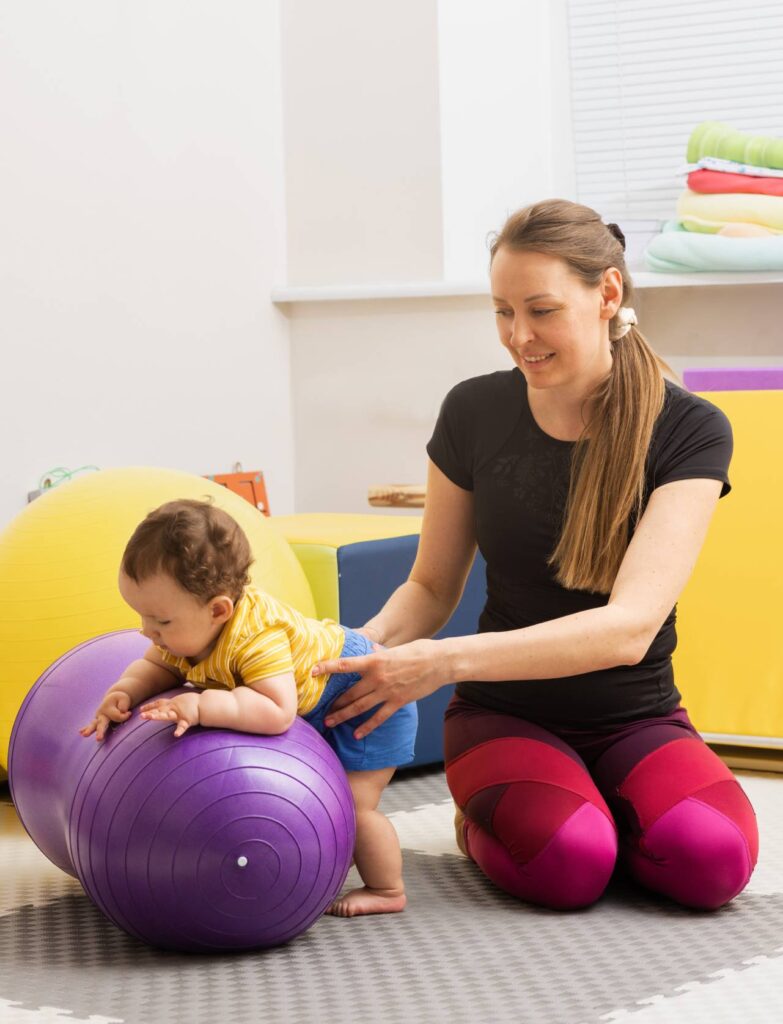
Child engaging in physical therapy for disorders of CNS at rehabilitation center. Toddler doing exercises on a therapy ball with assistance specialist
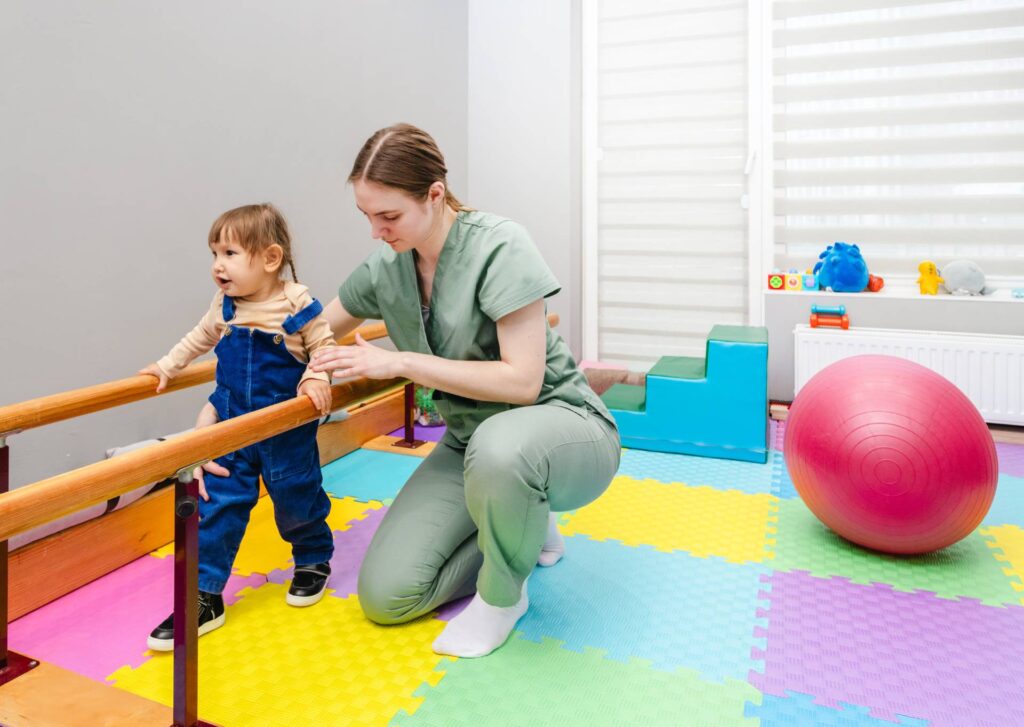
Little girl is assisted by therapist in physical rehabilitation exercises in bright, playful therapy environment. Handrails for restoring walking skills will help in rehabilitation of child
How Physiotherapy Can Help Children Following SDR Surgery

Specialist rehabilitation that grows with your child

Physiotherapy is essential after SDR and helps children to strengthen weaker muscles, relearn movement skills and build their functional ability. Our team is experienced in guiding children through this process, working flexibly to meet changing needs across months and years. Whether your child is newly post-operative or years down the line, we offer input that is proactive, practical and positive.
Rehabilitation typically starts in hospital and continues intensively once your child is home. We can support with structured therapy programmes, guidance for schools or carers, and regular reassessments to keep goals and therapy aligned. Our approach is always about enabling children to reach their potential in the way that suits them best.

Our physiotherapy interventions may include: expand to list like ‘Children’s Physiotherapy following Brain Injury’ section in Acquired Brain Injury Physiotherapy – Paeds Physio

  • Tailored strength and conditioning programmes.
  • Gait training and mobility practice.
  • Core and trunk control development.
  • Stretching and range of motion exercises.
  • Postural support and seating advice.
  • Functional movement training (e.g., transfers, stairs).
  • Advice and education for families, schools and carers.
  • Long-term monitoring and support as children grow.
PHYSIO THAT MAXIMISES PROGRESS

Here to help your child thrive after SDR

SDR is a significant decision and the months and years that follow it can be just as important. We’re here with steady support, expert input, and a commitment to helping your child make the most of every gain.