Physio for Children with Genetic Conditions

Our expert kids physio team support children with genetic disorders to move, play and thrive.

Specialist Paeds Physiotherapy for Genetic Disorders

Therapy for children with genetic disorders

Fun, effective therapy for children with genetic disorders including Down’s Syndrome, Rett Syndrome, Muscular Dystrophy and other genetic conditions. Our paediatric physiotherapy team has extensive experience in supporting children with genetic conditions such as Down’s Syndrome, Rett Syndrome, Muscular Dystrophy, Prader-Willi Syndrome, and Angelman Syndrome. Genetic conditions present unique developmental and physical challenges, and we tailor each physiotherapy plan to suit the needs of the individual child. We focus on improving motor skills, enhancing muscle strength, supporting posture and mobility, and encouraging participation and enjoyment in daily life. Our children’s physiotherapy services include interventions such as early movement facilitation, postural management, stretching routines, mobility and walking training, orthotic advice, and integration of fun, purposeful activity into each session. Whether delivered in the home, school, clinic, or community setting, our kids physio sessions are designed to support long-term progress.

We Help Children With Genetic Conditions

genetic conditions

We help children with genetic conditions

Our experienced team work with children affected by many genetic conditions, providing personalised physiotherapy to promote mobility, strength, and participation.
Physiotherapy plays a key role in supporting children with Down’s Syndrome as they develop strength, balance, and coordination. PaedsPhysio are experienced in supporting children with the physical challenges associated with the condition, such as low muscle tone (hypotonia), joint hypermobility, and delayed motor milestones. Through early intervention and engaging, play-based physiotherapy, we help children build core stability, improve postural control, and develop confidence in movement. Sessions may include guided exercises, gross motor skill practice, balance training, and support with transitions such as crawling, walking, and climbing. With a focus on fun, family involvement, and functional progress, we aim to help every child reach their physical goals and thrive.
Paediatric physiotherapists offer expert support for children and young people with Rett Syndrome, a rare genetic neurological disorder. Rett Syndrome is often associated with loss of motor skills, reduced mobility, muscle stiffness, and coordination difficulties. Our children’s physio approach focuses on maintaining movement, improving joint range, and postural control through consistent intervention. Sessions may include assisted stretching, guided positioning, supported standing, and activities designed to encourage purposeful movement and prevent contractures. As Rett Syndrome progresses, we also address respiratory health, seating and equipment needs, using safe handling strategies to promote comfort and reduce the risk of complications. We place a strong emphasis on family involvement, sensory awareness, and maximising quality of life in everyday settings like home, school, or the community.
Our children’s physiotherapy service offers specialised support for young people living with forms of muscular dystrophy, including Duchenne, Becker, Limb-Girdle, and congenital types. These genetic neuromuscular disorders can lead to gradual muscle weakening, which may impact a child’s movement, balance, posture, and breathing over time. Our paediatric physios work closely with families to provide tailored interventions that help preserve flexibility, promote functional strength, and enhance postural alignment. Therapy may include guided stretching, supported exercise, and activity-based movement sessions designed to reduce discomfort and improve quality of life. For children who are walking, we aim to maintain mobility and build confidence with daily tasks. For those using wheelchairs or other assistive devices, we focus on maintaining health, improving strength, breathing exercises, and equipment solutions that promote comfort, independence, and engagement in home and school life.
Our children’s physiotherapy service also supports children with complex genetic conditions such as Prader-Willi Syndrome, Angelman Syndrome, Metabolic Syndromes and other rare neurodevelopmental disorders. These conditions often involve low muscle tone, delayed motor skills, coordination difficulties, and challenges with balance and mobility. Our paediatric physiotherapists provide targeted interventions to help improve strength, stability, and functional movement in a fun and motivating way. Therapy may include posture and alignment support, core strengthening, balance and gait training, and strategies to encourage safe, independent movement. Every physiotherapy plan is personalised to each child’s abilities and goals, helping them gain confidence, enjoy movement, and take part in daily life at home, in education, and in the community.
physiotherapist-supporting-kid-2021-08-26-15-45-22-utc
Child-in-park
genetic conditions

How we help – children with genetic disorders

At PaedsPhysio, we specialise in physiotherapy for children with all genetic conditions, offering compassionate, family friendly physio that supports physical development, everyday function and helps children to thrive. Many of the children we work with experience low or high muscle tone, generalised weakness, and challenges with coordination, posture, or mobility. Our paediatric physiotherapists create personalised therapy plans specific to the needs of each child, whether that’s taking first steps, playing independently, or joining in with school and family life. We work to boost confidence, promote independence, and help every child reach their full potential in a way that’s fun, achievable, and meaningful for them and their families.
  • Support gross motor development – guiding milestones like sitting, crawling, standing, and walking through structured, child focused physiotherapy.
  • Build core strength and postural stability – improving head control, sitting balance, and trunk support to enhance daily function and reduce fatigue.
  • Encourage safe, purposeful movement – using play-based strategies to improve coordination, balance, and spatial awareness in a fun, meaningful way.
  • Maintain flexibility and joint range – through stretching and positioning to prevent stiffness, reduce discomfort, and support long-term mobility.
  • Promote respiratory function – using breathing techniques, supported postures, and movement to aid lung health, especially in non-ambulant children.
  • Provide guidance on specialist equipment – including seating, mobility aids, orthotics, and standing frames to promote participation and comfort.
  • Improve independence and physical confidence – helping children engage more fully in home, school, and community life with greater self-belief and ability.

We Help Children With Genetic Conditions

genetic conditions

Our specialist PaedsPhysio service for genetic conditions helps to:

  • Support gross motor development – guiding milestones like sitting, crawling, standing, and walking through structured, child focused physiotherapy.
  • Build core strength and postural stability – improving head control, sitting balance, and trunk support to enhance daily function and reduce fatigue.
  • Encourage safe, purposeful movement – using play-based strategies to improve coordination, balance, and spatial awareness in a fun, meaningful way.
  • Maintain flexibility and joint range – through stretching and positioning to prevent stiffness, reduce discomfort, and support long-term mobility.
  • Promote respiratory function – using breathing techniques, supported postures, and movement to aid lung health, especially in non-ambulant children.
  • Provide guidance on specialist equipment – including seating, mobility aids, orthotics, and standing frames to promote participation and comfort.
  • Improve independence and physical confidence – helping children engage more fully in home, school, and community life with greater self-belief and ability.
guiding milestones like sitting, crawling, standing, and walking through structured, child focused physiotherapy.
improving head control, sitting balance, and trunk support to enhance daily function and reduce fatigue.
using play-based strategies to improve coordination, balance, and spatial awareness in a fun, meaningful way.
through stretching and positioning to prevent stiffness, reduce discomfort, and support long-term mobility.
using breathing techniques, supported postures, and movement to aid lung health, especially in non-ambulant children.
including seating, mobility aids, orthotics, and standing frames to promote participation and comfort.
helping children engage more fully in home, school, and community life with greater self-belief and ability.
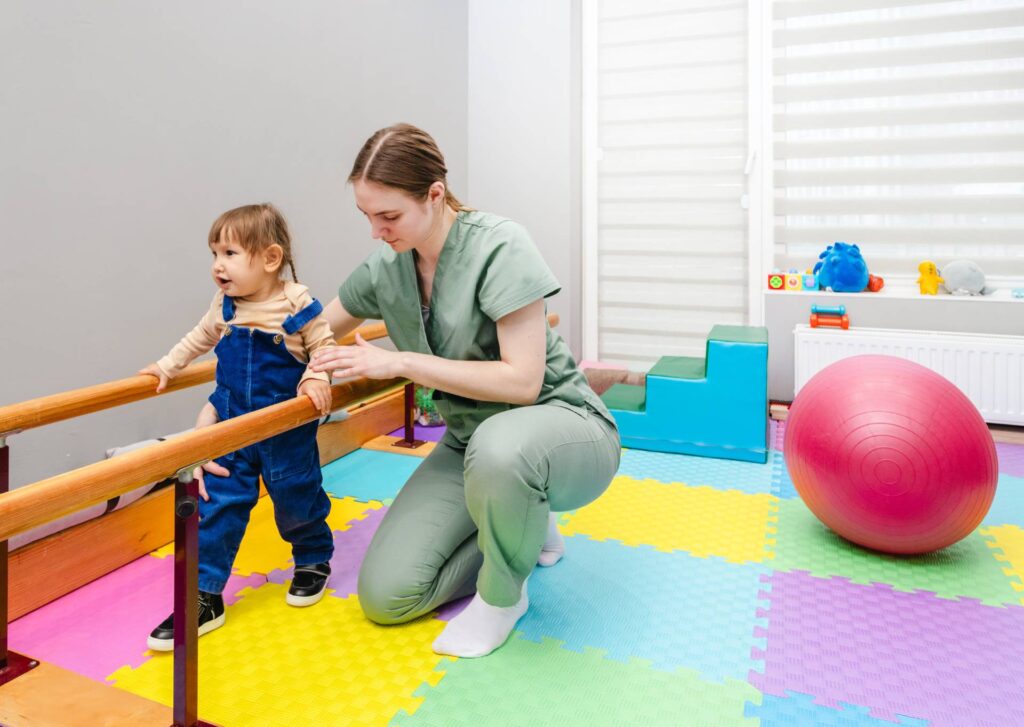
Little girl is assisted by therapist in physical rehabilitation exercises in bright, playful therapy environment. Handrails for restoring walking skills will help in rehabilitation of child